Pisa — Because Everyone Has to Take That Photo
Pisa sits perfectly between the two moments of your trip: arrival and departure. The airport is practically in the heart of the city, and it would be a real shame to fly through Pisa and see nothing but the airport.
If you’re arriving early on 7 September or flying home in the evening on 12 September, leave your luggage at the airport and head into the city. 2 or 3 hours is more than enough for a relaxed walk, gelato, coffee, and of course, the famous Leaning Tower.
How to Get to the City Centre
Forget taxis and buses. Pisa has its own small shuttle train — the PisaMover — which takes you directly from the airport terminal to the main railway station, Pisa Centrale, in just a few minutes.
How to find it - After leaving the terminal, simply follow the signs for PisaMover. The station is located on the left-hand side of the airport.
At the station, you’ll find ticket machines where you can select English and pay by card or cash.
Ticket price - €6.50 one way. You can also buy a return ticket straight away. It’s worth carrying some small cash notes or coins with you — the machines don’t always accept cards and may reject €20 notes.
Journey time - Just a few minutes. The PisaMover is fully automated, electric, and runs daily from 6:00 AM until midnight.
And once you arrive at Pisa Centrale, the best part begins: walking through the city itself. From the station, it’s around a 25-minute walk to the Leaning Tower, crossing bridges over the Arno River, winding through narrow streets of the old town and little piazzas that practically invite you to stop for a coffee or gelato. No buses. No stress. Just a beautiful walk through Pisa.
What to Eat on the Way to the Tower
The walk from the station to Piazza dei Miracoli is part of the experience itself — and there are plenty of lovely places worth stopping at along the way:
📍Ristorante La Buca — close to the station, known for excellent seafood dishes. A great option for lunch straight after landing.
📍Griglieria Le Vettovaglie — located on the charming Piazza delle Vettovaglie, perfect for an aperitivo, a platter of cured meats and cheeses, or a full Italian lunch. Pasta, risotto, wine. Classic trattoria atmosphere done properly.
📍Ristorante Pizzeria il Borgo 21 — highly recommended for pizza if that’s what you’re craving.
📍La Bottega del Gelato — gelato. Need we say more?
📍Dal Mozza Gourmet —if you’d rather grab something quick, their fresh focaccia sandwiches are perfect for eating on the go.
What to Eat Near the Tower
The area around Piazza dei Miracoli is full of tourist traps, but there are a few genuinely good spots worth knowing about:
📍Olio e Parmigiano — fresh pasta made on site. Definitely try the ravioli with mozzarella and tomatoes. We’ve had it ourselves, and honestly, it was delicious.
📍Il Peperoncino — despite being right in the tourist area, they serve genuinely great Italian food. We especially recommend the black risotto and the steaks.
📍La Torre Ristorante Pizzeria — recommended for pizza and pasta, and a great option for a relaxed lunch before or after visiting the tower.
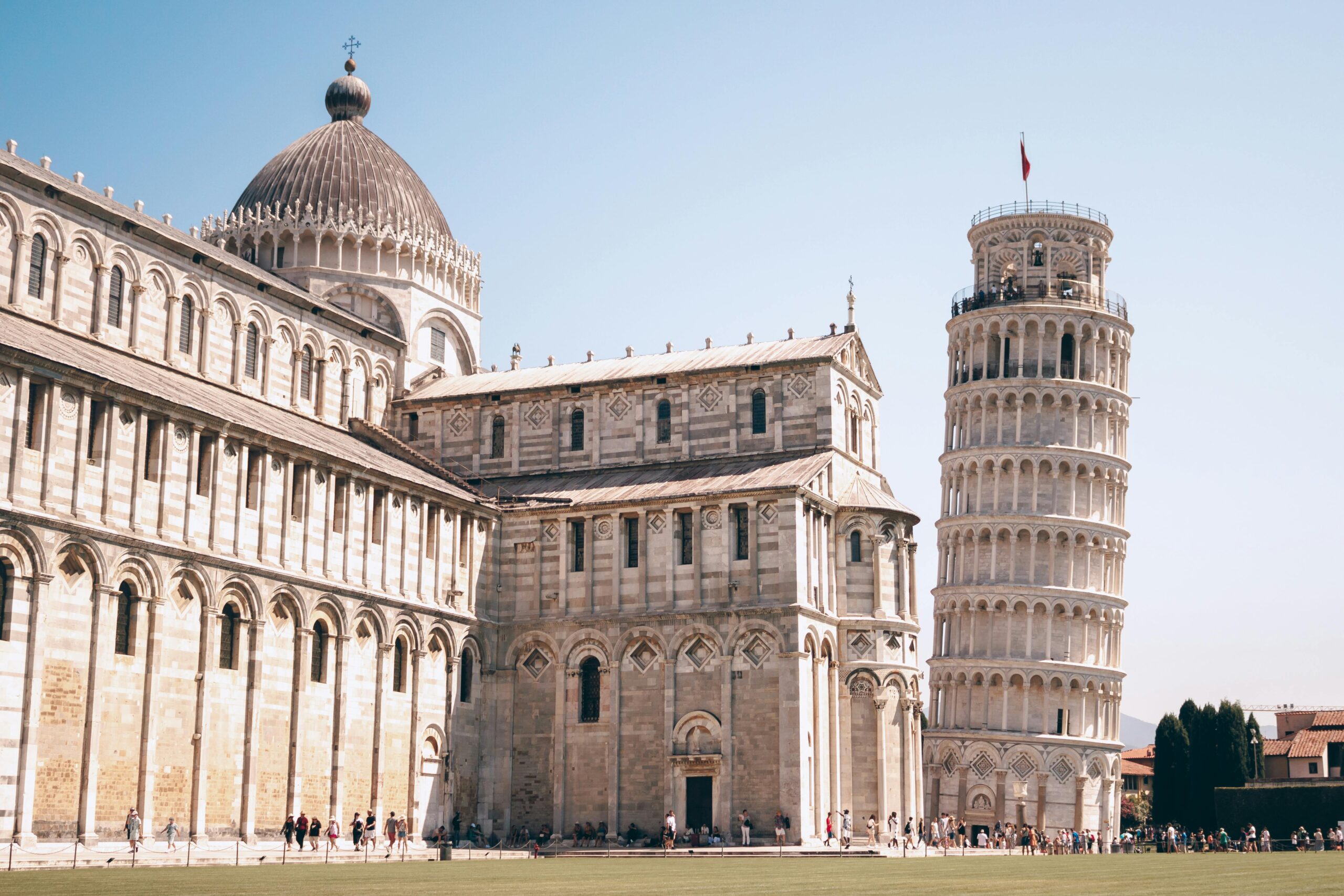
The Leaning Tower — Why Is It Leaning?
Before you arrive and take the obligatory “holding up the tower” photo, here’s the story that will make you see it very differently.
The short answer? They built it in the wrong place, on the wrong ground, with foundations that were far too shallow. Pisa sits on soft alluvial soil made of sand, clay, and seashells. In fact, the name “Pisa” itself comes from a word linked to marshy land. The heavy marble tower simply began sinking unevenly into the ground.
The longer answer is even better.
Construction began in 1173. Just five years later, after only the second level had been completed, the tower had already started to tilt noticeably. So what did the builders do?
They stopped.
Not because they had a clever plan, but because Pisa was almost constantly at war with Genoa, Lucca, and Florence, so construction was abandoned for nearly a century.
And strangely enough, that accidental pause is exactly what saved the tower. The ground had time to stabilise under the weight.
When construction finally resumed, the builders attempted a rather ingenious solution: they made one side of the upper levels slightly taller to visually compensate for the lean. That’s why the tower today has a subtle banana-like curve, something you can clearly notice when approaching from the western side of the square.
Unfortunately, the extra weight only made the problem worse.
By 1990, the tower was leaning at 5.5 degrees and was considered at serious risk of collapse. It was closed to visitors, and a huge engineering operation began. Over the course of a decade, engineers carefully removed small amounts of soil from beneath the northern side of the foundations, reducing the tilt to a safer angle of under 4 degrees.
The tower reopened in 2001.
And here comes the best part: the same soft ground that caused the leaning is also what protects the tower during earthquakes. Its unique vibrations don’t resonate with seismic waves, making it surprisingly resistant. What started as a flaw became its protection.
Experts believe the tower is now stable for at least another 200 years.
One perfect summary? The Italians accidentally built one of the most recognisable buildings in the world, and then spent the next 800 years trying to fix it. Thankfully, not too much.
How Much Time Do You Need?
Two to three hours is more than enough for a relaxed walk from the station, gelato along the way, Piazza dei Miracoli, and a leisurely lunch or aperitivo nearby. If you’d like to climb the Leaning Tower, add a little extra time, and it’s definitely worth booking tickets online in advance.
Getting Back to the Airport - The PisaMover works exactly the same way on the return journey. From Pisa Centrale railway station, head to platform 14, where you’ll find ticket machines right by the entrance to the platform.